Message from Program Director
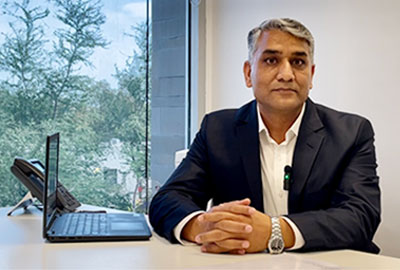
What separates executives who transform organizations from those who simply manage them?
Over seven decades of developing Pakistan's business leadership, we've learned about a particular pattern of performance. Some executives build institutions that continue to generate value long after their tenure. Others, despite technical competence and hard work, leave little lasting impact. The difference isn't intelligence or effort—it's a specific set of strategic capacities that can be developed but are rarely taught.
This observation drove us to fundamentally rethink executive education at IBA.
When Wharton partnered with the University of Karachi to establish IBA in 1955, management education in Pakistan didn't exist. We introduced the MBA in 1956. Since then, over 8,000 graduates have moved through our programs, many reaching the highest positions in national and international enterprises. But the challenges facing today's established executives—digital transformation, sustainability imperatives, geopolitical uncertainty—demand capabilities beyond what conventional management programs were designed to develop.
How do we develop leaders who don't just deliver quarterly results, but build institutional capabilities that create sustainable value across decades?
The answer became the DRIVEN framework—six dimensions that consistently distinguish transformational executives from transactional managers: Discipline, Reason, Integrity, Value-Added impact, Excellence, and Nobility. These represent specific operational capacities: architecting systems that perform at scale, making strategic decisions in conditions of high complexity, building organizational cultures where trust enables excellence, creating institutional knowledge that persists beyond individual tenure, maintaining execution standards that match the world's best, and leading with a mindset of stewardship rather than extraction.
The IBA-EMBA is our institutional response to developing these capacities in Pakistan's established leadership.
This program serves proven professionals with 10-20 years of experience, including a minimum of 5 years in management and leadership positions. If you're considering this program, you've already demonstrated capability. You've built teams, delivered results, earned responsibility. The question isn't whether you're competent—it's whether you're positioned to make the transition from functional expertise to strategic leadership, from managing operations to shaping institutions.
That transition requires transformation of how you think about leadership itself.
Conventional executive education offers weekend courses that fragment your attention across multiple subjects, case studies disconnected from your immediate challenges, credentials that signal completion rather than transformation. These approaches assume executives learn the same way younger professionals do. They don't.
The Immersive Block Model was designed around how established executives actually absorb and apply strategic frameworks. Rather than juggling multiple courses while managing complex responsibilities, you engage deeply with one critical domain at a time through 42 intensive blocks over two years. You complete all blocks of a course before moving to the next, allowing for full integration rather than superficial coverage.
This isn't merely pedagogical preference—it's recognition that senior executives need to apply frameworks immediately to current challenges, test them against real complexity, and bring results back into the learning environment.
But intellectual frameworks alone don't transform leadership capacity. The program integrates international immersion through direct engagement with globally recognized industrial clusters; access to IBA's Business Innovation Lab, where your current strategic challenges are analyzed by faculty experts; corporate mentorship from experienced executives providing experiential knowledge calibrated to your specific needs; and a capstone project where you apply program knowledge to real strategic issues facing a team member's organization.
Before the main program begins, all participants complete a five-weekend Academic Immersion Module—not remedial education, but calibration that sharpens analytical skills and creates a smooth transition into reflective practice.
Every element was built around a single principle: developing leaders measured not by results they generate for annual appraisals, but by institutions they strengthen, people they develop, and sustainable value they create that persists long after they've moved on.
This is leadership as stewardship. This is what we mean by DRIVEN.
We designed this program for executives who recognize that their continued evolution isn't a luxury or credential-gathering exercise—it's their organization's most valuable strategic asset and, collectively, Pakistan's comparative advantage in an increasingly complex global economy. The enterprises that will thrive won't necessarily be those with the best current strategies, but those led by executives with the capacity to continuously transform their strategic thinking as conditions evolve.
The IBA-EMBA represents the gold standard in executive education in Pakistan—not because we claim it, but because every design choice was built to develop the specific capacities that separate transformational leadership from competent management.
We deliver the EMBA program at Karachi and Islamabad, extending Pakistan's gold standard in executive education nationwide. We deliver content through national and international faculty who bring both academic rigor and practical insight. We cultivate a cohort representing Pakistan's most important sectors and industries, because executives learn as much from peer dialogue as from formal instruction.
Ultimately, the program's value isn't in what we provide—it's in what you become capable of building in our community.
If you recognize yourself in these words, we are where you belong.
Dr. Muhammad Shafique
Program Director, MBA & Executive MBA
School of Business Studies, IBA Karachi